

The following is from The Lore of Albion -05- ,MoA, 2026
THE LAST SIN-EATER
The Strange Story of Britain’s Sin-Eaters
British folklore is filled with customs that, viewed from a distance of several centuries, can seem remarkably strange. Few, however, sound quite as bizarre at first encounter as sin-eating.
The belief behind it was relatively simple, yet deeply unsettling. If someone died before they had been able to confess their sins, receive absolution, or otherwise settle what still burdened their soul, there was, according to tradition, one last extraordinary possibility: another person could take upon themselves what the dead had left behind.
Not through prayer, confession or any official rite of the Church, but by eating and drinking.
The person known as the sin-eater would eat bread beside or over the body of the deceased, sometimes accompanied by ale or another drink, and would receive a small payment for the service. In John Aubrey’s seventeenth-century account, the payment consisted of a loaf of bread, a bowl of beer and sixpence; in a version recorded by Matthew Moggridge in 1852, a dish of salt was placed upon the dead person’s chest, with bread laid upon it for the sin-eater to consume. The details varied, but the belief behind them remained the same: together with the food, the sins of the dead passed into another person.
The deceased could thus be freed from what they had no longer been able to put right in life.
But the sins did not disappear. Someone else carried them away.
BREAD UPON THE DEAD
Accounts of sin-eating survive mainly from Wales and the English-Welsh borderlands, and although the details of the ritual differed from place to place, bread appears again and again.
But why bread?
There is probably no certain answer left to us. Bread was both the simplest of everyday foods and one of Christianity’s most powerful symbols, while food and drink had long held an important place in wakes, funeral feasts and other customs surrounding death.
Sin-eating took that connection in a far stranger direction: bread was no longer merely part of a funeral custom, but became a link between the living and the dead. According to the belief, it took on whatever burdened the dead person’s soul, and by eating it the sin-eater took that burden into his own body. Sin became almost tangible – something that could be passed from one person to another and consumed.
There was also a peculiar contradiction at the heart of it all. Bread, so closely associated in Christianity with the body of Christ, sacrifice and redemption, had become the instrument of a folk ritual that existed outside the official rites of the Church.
A FEW PENNIES FOR DAMNATION
Perhaps the strangest part of the story is not the ritual itself, but the position of the person willing to perform it.
John Aubrey described one sin-eater as a wretched, poor man, while Matthew Moggridge’s nineteenth-century account painted an even darker picture: according to him, local people despised and avoided the sin-eater because they believed he genuinely took upon himself the sins of those over whom he performed the ritual, becoming a man whose own soul was beyond salvation.
And therein lay the true tragedy of the sin-eater. The community needed him when someone died, yet shunned him for doing the very thing they needed him to do. They summoned him, gave him bread and drink, pressed a few coins into his hand, and when his task was complete, left him alone once more – now carrying the burden from which the dead had supposedly been freed.
But there is one question the old accounts cannot answer: did the sin-eater himself believe any of this?
Perhaps some did it simply because they were poor and needed the bread, the drink and those few coins. But what if a sin-eater truly believed? What if, with every mouthful, he felt that he was swallowing the sins of another human being, until after years or even decades he was carrying not merely the sins of one dead person, but those of an entire village?
We cannot know whether the real sin-eaters experienced their role in this way. They left us no personal testimonies, and much of what survives about them was written down by others, so it is entirely possible that over the centuries the figure of the sin-eater grew darker in the telling.
AN ANCIENT CUSTOM OR A STORY WELL TOLD?
There is, however, a problem with the history of sin-eating: we tell far more about it than we can know for certain.
Accounts from the seventeenth to the nineteenth centuries do survive of funeral customs in which bread, drink and the taking on of the dead person’s sins were connected. John Aubrey was already writing about the practice in the seventeenth century, and later writers recorded similar traditions in different parts of Wales. Sin-eating, therefore, is not simply a modern invention.
What is much harder to establish is how widespread or consistent the custom ever was, or even whether the sin-eater existed as a distinct occupation in anything like the way we imagine today. Sources disagree over where and when the ritual took place, what the sin-eater ate or drank, and even who performed the role. It is therefore possible that several originally separate funeral traditions gradually merged into the dark and peculiar story we now know as sin-eating.
Yet something must have happened for the memory of such a figure to survive for centuries: a person summoned when someone died with, in the eyes of the community, something still unsettled between their soul and the world beyond.
He was given bread, a drink and a few coins, then sent home with whatever the dead had left behind.
And if he himself believed in what he was doing, perhaps each time he could feel that the burden from which another soul had been released was now his own – and that one day he would have to answer for everything he had taken from others, when his own soul was placed upon the scales and salvation or eternal damnation hung in the balance.
That leaves one final question, to which neither Aubrey nor Moggridge, nor the stories that followed them, offer any reassuring answer.
If a sin-eater spent his life taking upon himself the sins of others, perhaps risking his own salvation in the process, what happened when at last it was he who lay upon his deathbed?
Who ate the sins of the sin-eater???…
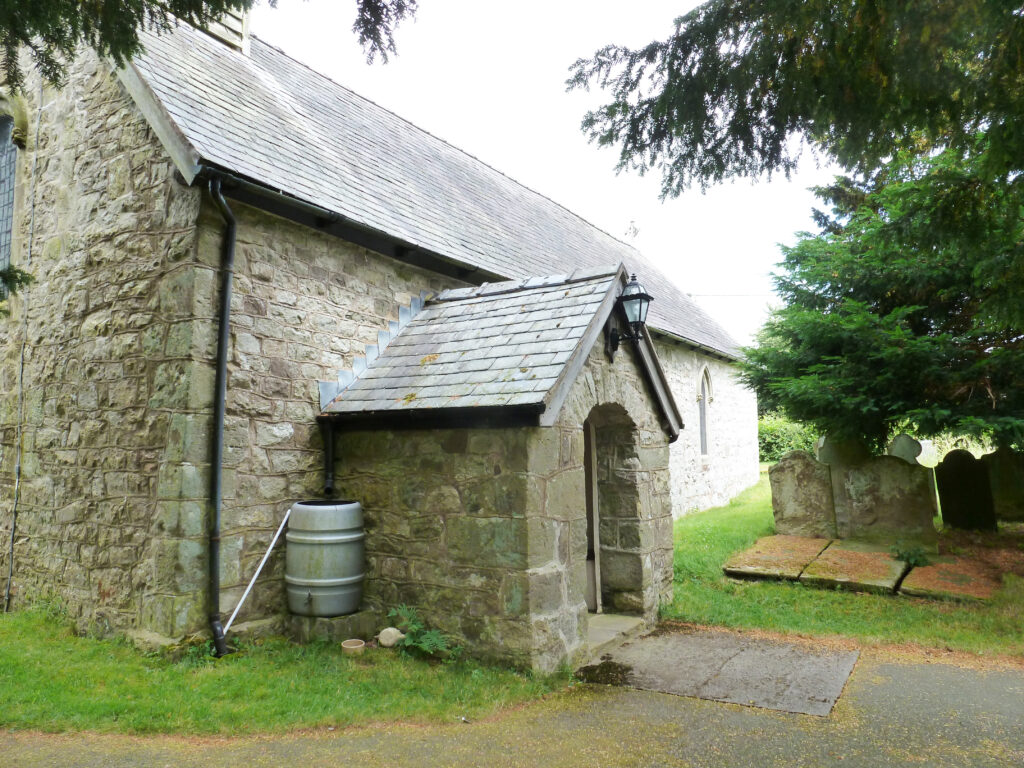
Ratlinghope Church Shropshire
THE LAST SIN-EATER
Today, the man most often associated with the final days of English sin-eating is a Shropshire farmer named Richard Munslow, frequently described as England’s last sin-eater.
Munslow, however, does not fit the familiar image of the ragged, starving outcast living on the edge of society. He farmed near Ratlinghope, owned land, employed workers and appears to have been a respected member of the local community. There is little reason to think that hunger or the promise of a few coins drove him to take on such a peculiar role.
Something happened in his life, however, that casts the story in a very different light.
Richard and his wife Ann had already lost their first child, George, in 1862, when he was only eleven weeks old. Eight years later, the family was struck by an almost unimaginable tragedy within the space of only a few days: their three-year-old son Thomas died on 1 May 1870; six-year-old James John died the following day; and on 7 May, their youngest daughter Elizabeth died at just a year and a half old. According to a local church history, all three died of scarlet fever.
Three children in six days.
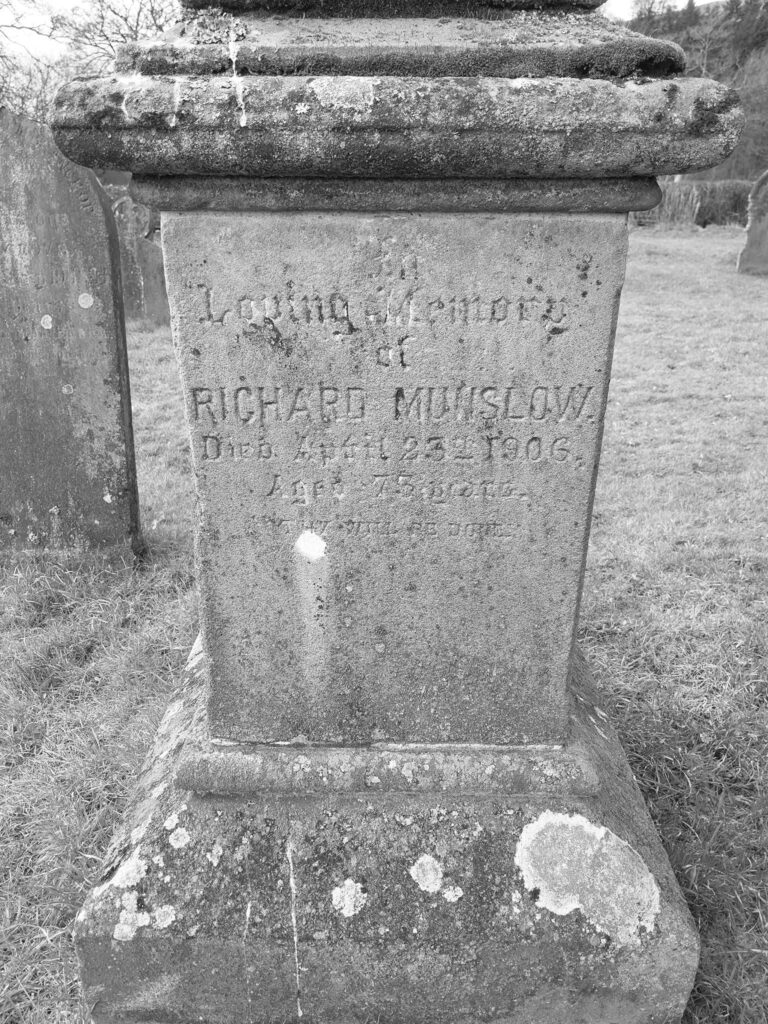
Today, the names of all four children can still be found on the family memorial at Ratlinghope, where Richard and Ann themselves were later laid to rest. Words spoken by Jesus about children were carved upon its base, while beside Richard’s name appears a simple inscription:
“Thy will be done.”
Local tradition holds that after the loss of his children, Munslow revived the already fading custom of sin-eating in the area. Whether that tragedy truly prompted him to do so cannot now be proven; even the local history of Ratlinghope churchyard presents the connection only as a possibility.
But if it did, one question immediately follows: why?
Perhaps, after suffering such devastating loss himself, he wanted to offer other grieving families the reassurance he had once needed. It is also possible – although there is no evidence to prove it – that he saw the practice as some form of personal penance. Did a father who had buried four children ever ask himself whether there was something he could have done differently?
We do not know. Munslow left no explanation behind.
Perhaps that is precisely what makes his story so intriguing: a prosperous and respected man, apparently driven neither by hunger nor exclusion, nevertheless voluntarily assumed a role that others feared.
Richard Munslow died in 1906. His grave still stands today in the small churchyard of St Margaret’s Church in Ratlinghope, among the Shropshire Hills.
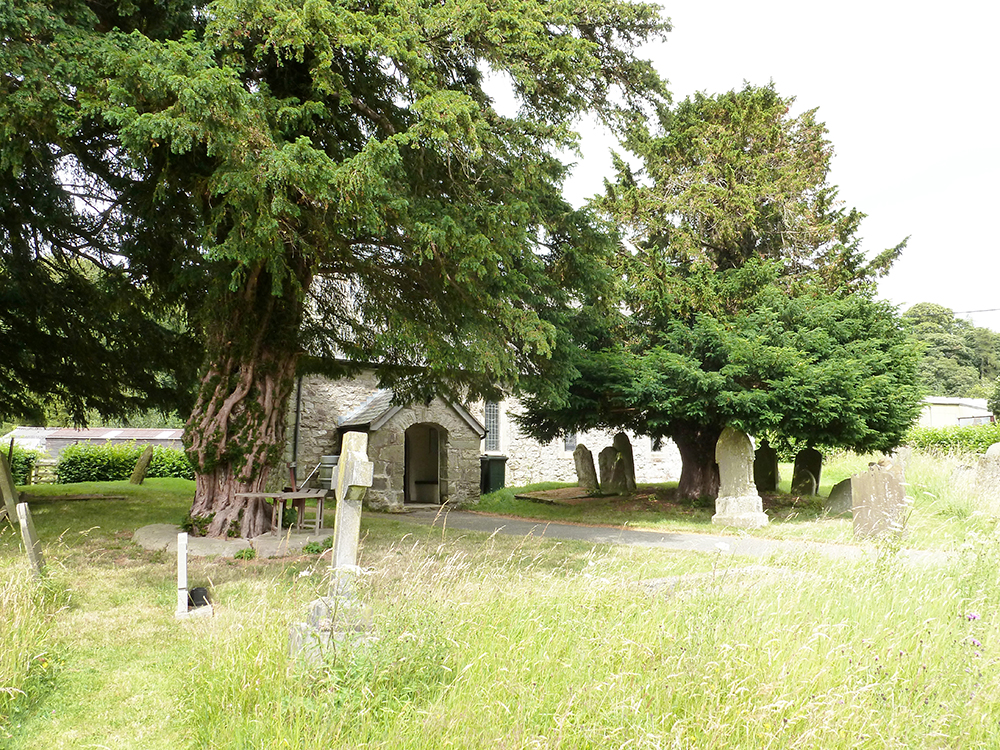
Ratlinghope Church was the start of the journey of The Reverend Carr
To read the story click below
The nearest Public House to Ratlinghope Church is The Bridges
Click to find out more